

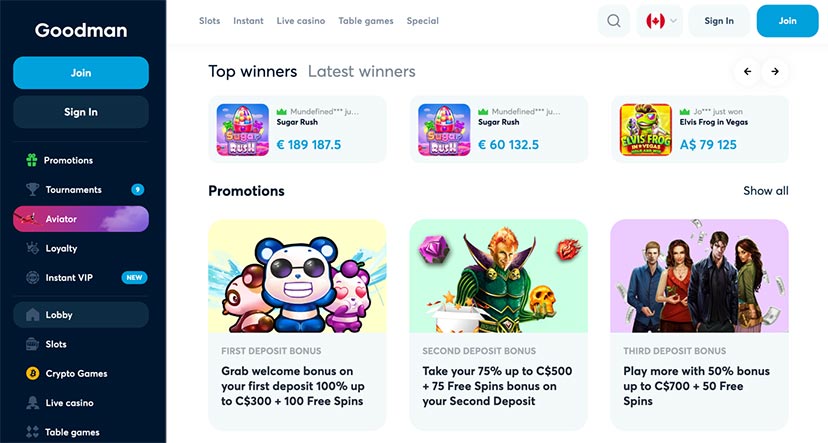
Most players sign up, grab a welcome bonus, and never look back. Yet the structured loyalty tier system, quietly tracking every spin and hand, often matters more than the initial offer. We have spent countless hours dissecting the mechanics behind online casino rewards, and one element consistently distinguishes casual dabblers from seasoned players: a genuine understanding of loyalty tiers. This system is not a decorative gimmick. It is a meticulously engineered framework designed to convert your regular play into escalating privileges, cash rebates, and personalised service. At Good Man Casino, we see this pattern repeat itself daily. Players who identify the tier structure early tend to extract far more value from the same bankroll than those who treat every session as a standalone event. In this guide, we are going to pull back the curtain on how these hierarchies function, what they demand from you in terms of real activity, and where the genuine benefits hide. We will move past the marketing fluff and look at the mathematics, the psychology, and the strategic decisions that can turn a standard entertainment budget into a long-term asset.
What Are Casino Loyalty Tiers and Their Mechanics?
Loyalty tiers are a segmentation tool. Casinos use them to sort players by their net value to the house. A simple points-for-play scheme lets you accumulate credits and exchange them for cash. A tiered program assigns you a status level, Bronze, Silver, Gold, Platinum, Diamond, or something similar, that unlocks a permanent set of benefits as long as you hold that rank. The mechanism is straightforward: every real-money wager you place earns a certain number of status points or comp points, and crossing predetermined thresholds advances you into the next tier. The catch lies in the calculation. Points are almost always based on total turnover, not wins or losses. This is the most misinterpreted concept among new players. You do not need to lose money to climb. You just need to cycle funds through the games. A player who deposits $200 and generates $5,000 in total bets over a weekend will often outrank a high roller who deposited $2,000 but played only a few high-stakes rounds. Because the model is turnover-based, strategic game selection and consistent session length matter more than the size of your wallet.
These tiers are not static. Most programs run on a rolling qualification period (a calendar month, a quarter, or a rolling 90-day window). When that cycle ends, the casino recomputes your status. If you haven’t met the maintenance requirement, you drop back down. This creates a continuous incentive to stay active, which is exactly what the casino wants. We see this as a discussion rather than a trap. The house wants your consistent presence. In exchange, it gives back a portion of its theoretical edge through enhanced rakeback, faster cashouts, and exclusive event access. The key is that tier benefits are not a reward for past loyalty. They are an allocation the casino makes in your future play. At Good Man Casino, we look for transparency in how the thresholds are displayed. A well-designed interface shows your current progress bar, the exact number of points required for the next level, and the expiry date of your current status. There should be no ambiguity.
Typical Errors Newcomers Make with Loyalty Tiers
We have catalogued a consistent set of errors that keep players from getting full value from tiered programs. The most damaging one is chasing a tier without a budget. The moment you raise your bet size or session frequency just to achieve the next status level, you give the house a psychological victory. Tier progression must be a result of your normal entertainment spend, not the goal itself. Another regular mistake is ignoring the expiry calendar. We have witnessed players gather enough points for a status upgrade in the final days of a qualification period, only to have the counter reset because they didn’t grasp the cutoff date. Always know whether your program uses a calendar month reset or a rolling period, and arrange your heavier sessions accordingly. A third trap is failing to read the game weighting table. Not all games count equally to status points. Slots usually add 100%, but table games and video poker can be rated as low as 5% or 10%. If you’re a blackjack player grinding for tier status without reviewing the weighting, you might require to wager twenty times more than a slots player to obtain the same credit. That disparity can render the pursuit mathematically pointless.
- Going after a tier by increasing your budget beyond your means, turning a loyalty perk into a loss leader.
- Neglecting the reset date and forfeiting accumulated progress because of a calendar misunderstanding.
- Participating in low-weighted games without realising that your status points are accruing at a fraction of the expected rate.
- Stockpiling comp points indefinitely, not knowing that many programs expire unused points after a set period of inactivity.
- Accepting cashback as bonus funds with high wagering requirements instead of demanding withdrawable cash rebates.
- Ignoring the maintenance requirements and being caught off guard when a downgrade strips away withdrawal speed benefits.
There is also a subtler mistake. Players treat all tiers as the same across different casinos. A Gold status at one operator might offer a 0.2% cashback rate and a dedicated host. At another, it might be just a slightly faster comp point accrual. We always evaluate the tangible return of a tier against the theoretical loss required to reach it. If reaching Silver requires $10,000 in turnover on slots with a 4% house edge, your expected loss is $400. If the Silver benefits only yield $50 in additional comps and a few free spins, the mathematics do not warrant altering your play pattern. The tier is only worth chasing if the incremental benefits exceed the incremental expected loss. Most players never carry out that calculation. At Good Man Casino, the mid-tier thresholds are set to return roughly 15% to 25% of the theoretical hold back to the player in combined hard and soft benefits. That ratio sits comfortably within the industry’s upper quartile.
How Points and Status Credits Accumulate
Playthrough Rules vs. Cash Play
The distinction between bonus wagering and status point accumulation is one of the most critical distinctions we hammer into every newcomer. When you fulfill a welcome bonus, your bets apply to the wagering requirement at different rates depending on the game. Slots often count 100%, table games 10%, live dealer titles 0%. Status points, however, are calculated on your actual cash bets, not on the bonus contribution percentage. If you play through a sticky bonus, you might generate zero tier progression while still playing through your balance. We have seen players spend an entire weekend clearing a $500 bonus, only to discover their loyalty bar hasn’t moved a single notch. To avoid this, separate your play into two phases. First, complete the bonus using the most efficient games permitted. Then switch to real-money mode on games that give the best status point earning rate per unit of risk. At Good Man Casino, the interface clearly labels which portion of your balance is cash and which is bonus. Only cash bets apply to your tier progress. We wish every operator would adopt that transparency.
Boosters and Multipliers
Many programs include point accelerators that reward specific actions. Understanding them can dramatically accelerate your climb. Common accelerators include double or triple points on certain days of the week, bonus status credits for using a particular payment method, or multipliers tied to new game releases. We treat these as tactical opportunities. If a casino offers triple comp points on all live dealer games every Tuesday, we move our roulette and blackjack sessions to that day. That multiplies by three our tier progression rate without increasing our risk. Some programs also offer a permanent multiplier based on your current tier. A Gold player might earn 1.5x points on every bet, which then compounds with the daily promotion. The compound effect can be substantial. Over a month of disciplined play, a player who synchronizes their sessions with these accelerators can reach the next tier 30% to 50% faster than one who plays at random times. We always check the terms for any cap on accelerated points. Some operators cap the bonus portion to a fixed amount per day, but even capped, the boost is worth the scheduling effort.
The Standard Structure of a Tiered Loyalty Program
Entry Level: The Opening Tier
Nearly all programs place you at the bottom rung the moment you register, frequently without requiring a deposit. This entry tier is purposely sparse. It typically limits you to standard comp point accumulation at a normal rate, plus access to a few weekly free spin promotions. We label it the observation deck. The casino monitors your initial behaviour: deposit frequency, game preferences, average bet size. It employs that data to calculate how forcefully to market the next tier to you. From a player’s perspective, the entry level is not the place you want to linger. The comp point to cash conversion rate is typically at its most frugal here, at times as low as 0.05% of your turnover. If you play solely at this level, you abandon a significant chunk of theoretical return on the table. Our advice is to handle this phase as a trial period. Utilize it to test the platform’s stability, withdrawal speed, and game variety. Have a clear plan to graduate within your first month if the casino proves trustworthy.

Middle Tier: The Optimal Sweet Spot
The intermediate levels, often labeled Silver and Gold, are the best range for the strategic player. Here, the comp point accumulation rate typically jumps by 20% to 50% compared to the base level, and gentle extras like a dedicated account manager or somewhat quicker withdrawal processing start to appear. We have found that this is the stage where the house gives back enough to noticeably offset the mathematical edge on low house-edge games. A Gold-tier player at a well-structured program might earn points at a rate that practically lowers the house edge on blackjack by 0.1% to 0.2%. That change is not insignificant for anyone engaging in hundreds of hands per session. Mid-tier players also often gain access to weekly cashback offers that are not publicized publicly. These cashback deals, generally 5% to 10% of net losses determined over a specific period, act as a safety net that can transform a losing week into a break-even one. We always check whether the cashback is paid as withdrawable cash or as bonus funds with wagering requirements. The first is a genuine perk. The second is just a loyalty mechanism presented as a reward.
Premium and Whale : The Invitation-Only Summit
Casual play infrequently reaches the uppermost tiers. They demand turnover that suggests either very high stakes or very high frequency. In many programs, the final tier is invitation-only, and the casino’s management individually reviews your account before granting access. That is where the relationship transitions from transactional to bespoke service. We have seen VIP players get personalised withdrawal limits that exceed standard caps by ten times, dedicated payment processing that clears funds in hours rather than days, and physical gifts from event tickets to luxury electronics. The comp point conversion at this level can become extraordinarily generous, sometimes approaching 0.3% or more of total turnover. Combined with cashback and loss rebates, that can push the net expected return on certain games close to 99.8%. But the maintenance requirements at this summit are harsh. One quiet month can trigger a review. The drop from VIP back to mid-tier is often steep, stripping away the very perks that made the high-volume play sustainable. At Good Man Casino, the top tier runs on a relationship-managed model. The terms are negotiated individually, which we find far more player-friendly than rigid public thresholds that can be gamed.
The True Worth of Moving Up the Ranks
Tangible Rewards vs. Intangible Advantages
When we assess a loyalty program, we divide the benefits into two categories: hard rewards with a direct monetary value, and soft perks that improve the experience but can’t easily be converted to cash. Hard rewards cover comp point conversion rates, cashback percentages, and tangible gifts. Soft perks encompass faster withdrawals, higher deposit limits, dedicated support lines, and exclusive tournament access. Newcomers often concentrate on hard rewards because they are more straightforward to quantify. We have found that soft perks frequently deliver more practical value over time. A dedicated account manager who can personally authorize a withdrawal within an hour on a Friday evening, circumventing the standard 48-hour queue, is more valuable to a regular player than an extra 0.05% in comp points. An invitation to a closed tournament with a guaranteed prize pool and a low number of participants can provide far higher expected value than accumulating a few extra dollars in cashback. The art of tier progression is recognising that the sum of these benefits alters the fundamental cost of your entertainment, not just the occasional payout.
Cashout Processing and Increased Thresholds
Perhaps the most overlooked benefit of climbing the tiers is the difference in withdrawal processing. At the base level, a cashout request might stay in a queue for 48 to 72 hours, plus an additional processing period according to the payment method. By the upper mid-tiers, that window often reduces to 12 to 24 hours. At the VIP level, same-day processing is typical. For anyone who manages a dedicated gambling bankroll, this speed is not a luxury; it is a cash flow tool. Faster withdrawals enable you to return your winnings back into your account more quickly if you choose, or secure profits and remove the temptation to reverse the withdrawal. Higher tiers also bring elevated withdrawal limits, both per transaction and per week. A Bronze player might be capped at $5,000 per week, while a Platinum player can withdraw $50,000 in the same period. We have observed situations where a player lands a significant jackpot at the base tier and then spends weeks drip-feeding their own money out of the casino. A higher status eradicates that frustration completely. At Good Man Casino, the withdrawal acceleration is graded transparently, with the processing time cutting in half at each major status upgrade.
The way Good Man Casino Structures Its Player Tiers
We have reviewed the loyalty architecture at Good Man Casino in detail. It uses a five-tier model that recognizes consistency over sheer volume. The coinmarketcap.com entry point, named Rookie, demands no qualification and delivers a baseline comp point rate on par with the industry average. Progression to Silver, Gold, Platinum, and eventually the invitation-only Diamond tier is governed by a single status point currency. It builds up at a transparent rate across all game categories, with the weighting clearly indicated in the game rules. What distinguishes this program from many competitors is the absence of a hard monthly reset. Instead, Good Man Casino uses a rolling 90-day qualification window. Your status points from the past three months are always displayed, and your tier is recalculated daily. This rolling model removes the end-of-month panic and enables a more natural play rhythm. The operator publishes the exact status point thresholds for every tier except Diamond, erasing the guesswork that troubles many opaque VIP programs.
The benefits ladder at Good Man Casino is weighted heavily toward withdrawal enhancements and personalised support. That aligns with our view that soft perks often outweigh raw cashback. At the Gold tier, players access a 50% reduction in pending withdrawal time and a dedicated account representative who can resolve disputes without the standard support queue. Platinum introduces a weekly cashback program computed on net losses and provided as withdrawable cash with zero wagering requirements. We regard that the single most valuable hard reward in the entire structure. The comp point conversion rate improves at each tier, and the points never expire as long as the account stays active at least once every six months. That policy respects the player’s pace. The Diamond tier operates on a relationship-managed basis, with customised withdrawal limits, personalised gifts, and invitations to offline events. For the analytical player who prizes transparency and predictable progression, this structure eliminates the ambiguity that often causes loyalty programs feel like a gamble within a gamble.
Strategies to Maximise Your Tier Progression Without Needing Overplaying
Picking Games and House Edge
The most effective lever you can use to speed up tier progression without your risk is strategic game selection goodmanaus.com. Every casino game has a theoretical return-to-player percentage. The contrast between a 96% RTP slot and a 99.5% RTP blackjack variant is significant when measured over the turnover needed to climb a tier. If you must to generate $20,000 in total bets to reach the next level, playing a 96% slot costs you an expected $800. A 99.5% blackjack game costs only $100 in expected loss, assuming perfect basic strategy. The challenge is the game weighting. You have to find the sweet spot of high RTP and high status point contribution. At Good Man Casino, certain low-edge table games contribute 20% to 50% of the wagering towards status points. That is advantageous by industry standards. We advise focusing on European roulette with the en prison rule, baccarat on the banker bet, and high-RTP video poker variants like Jacks or Better when used with optimal strategy. These games allow you to churn significant volume while keeping the mathematical drain to a minimum. You in essence buy your tier status at a discount.
Timing Your Sessions Around Promotions
We have touched on point accelerators previously, but session timing reaches past a single multiplier. Most casinos, including Good Man Casino, run cyclical promotions that merge deposit matches, free spins, and loyalty point boosts into one event. Stack these and you can earn tier progress while also obtaining bonus funds that offset your theoretical losses. For example, a weekend promotion presenting a 50% deposit match up to $200 plus double status points on all slots creates a window where your effective cost of tier progression drops sharply. The deposit match supplies additional ammunition. The double points reduce by half the turnover required to reach the next threshold. We arrange our heavier play sessions around these overlapping events, treating them as efficiency spikes in an otherwise steady accumulation curve. It is also beneficial monitoring the casino’s tournament schedule. Many tier-based programs award bonus status points as tournament prizes. Entering a low-stakes tournament with a guaranteed prize pool can sometimes deliver more tier progress than grinding the equivalent amount in standard play. The key is to treat your loyalty status not as a passive meter but as a resource to be actively managed, much like a bankroll.